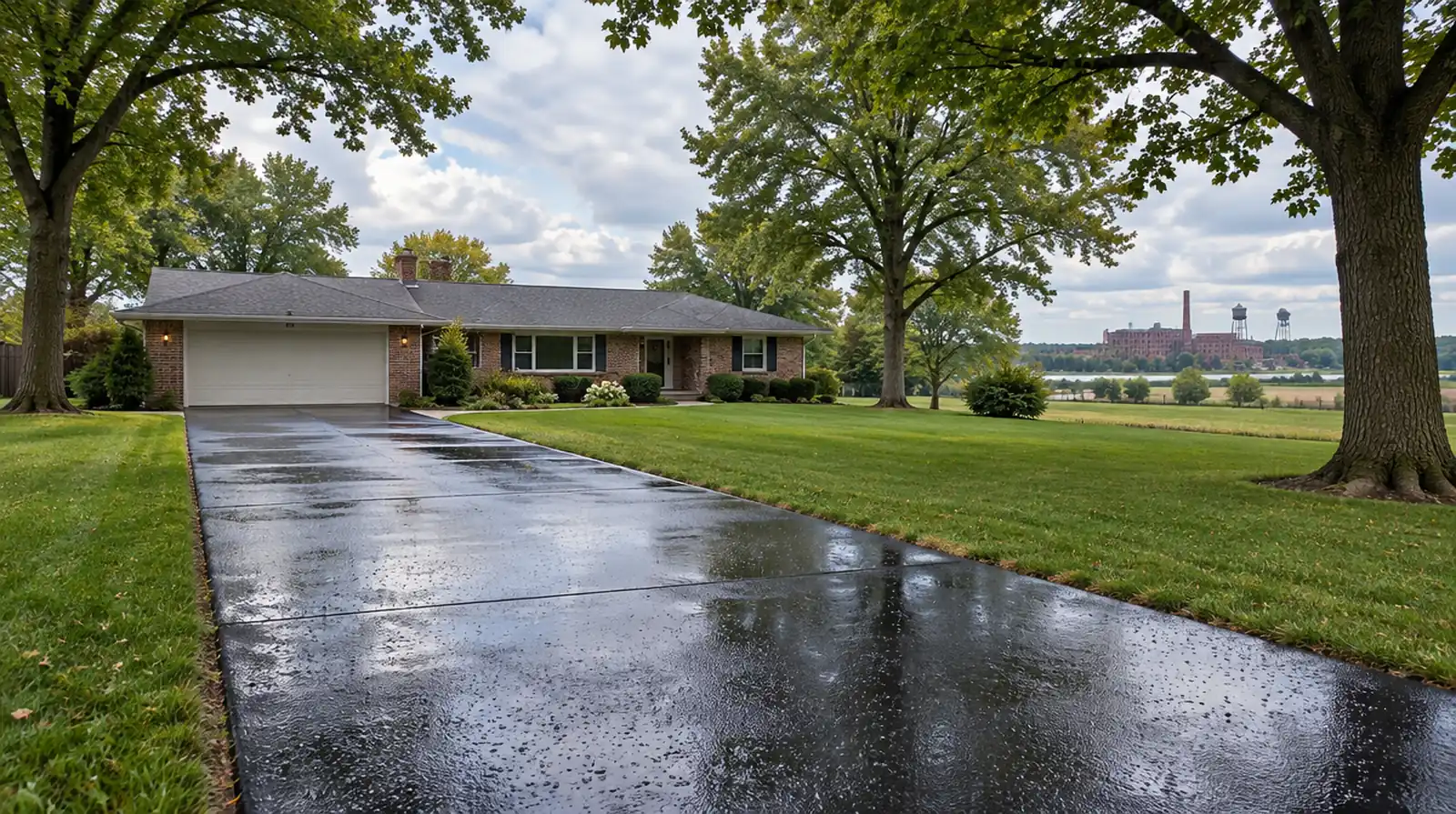
Why exterior concrete needs sealing
Driveways, sidewalks, porches and patios sit outside through every season. Rain soaks in. Winter freezes it. Salt from cars and de-icers adds chlorides that speed damage. Over time, the surface starts to flake, pit and crack. A good sealer reduces how much water and salt get into the concrete, which slows that damage and keeps the surface looking better.
Freeze-thaw in central Indiana
Our winters bounce above and below freezing many times. Each freeze pushes water trapped in concrete pores outward. Driveway aprons, steps and walks near the street take the most punishment because they get both plow spray and de-icer. Sealing before winter, and resealing on a schedule, is one of the cheapest ways to extend the life of exterior concrete.
Penetrating sealers
Silane and siloxane sealers soak into the concrete and react to form a water-repellent barrier inside the pores. They do not change the look much, do not make the surface slippery and allow vapor to escape. For driveways, walks and steps, penetrating sealers are usually our first recommendation.
Film-forming sealers
Acrylic and urethane sealers form a thin film on the surface. They add a darker, wet look or a sheen and are popular on stamped and decorative concrete patios. They need more frequent reapplication and can become slippery if applied too thick, so we add slip-resistant additives where people walk.
Preparing the surface
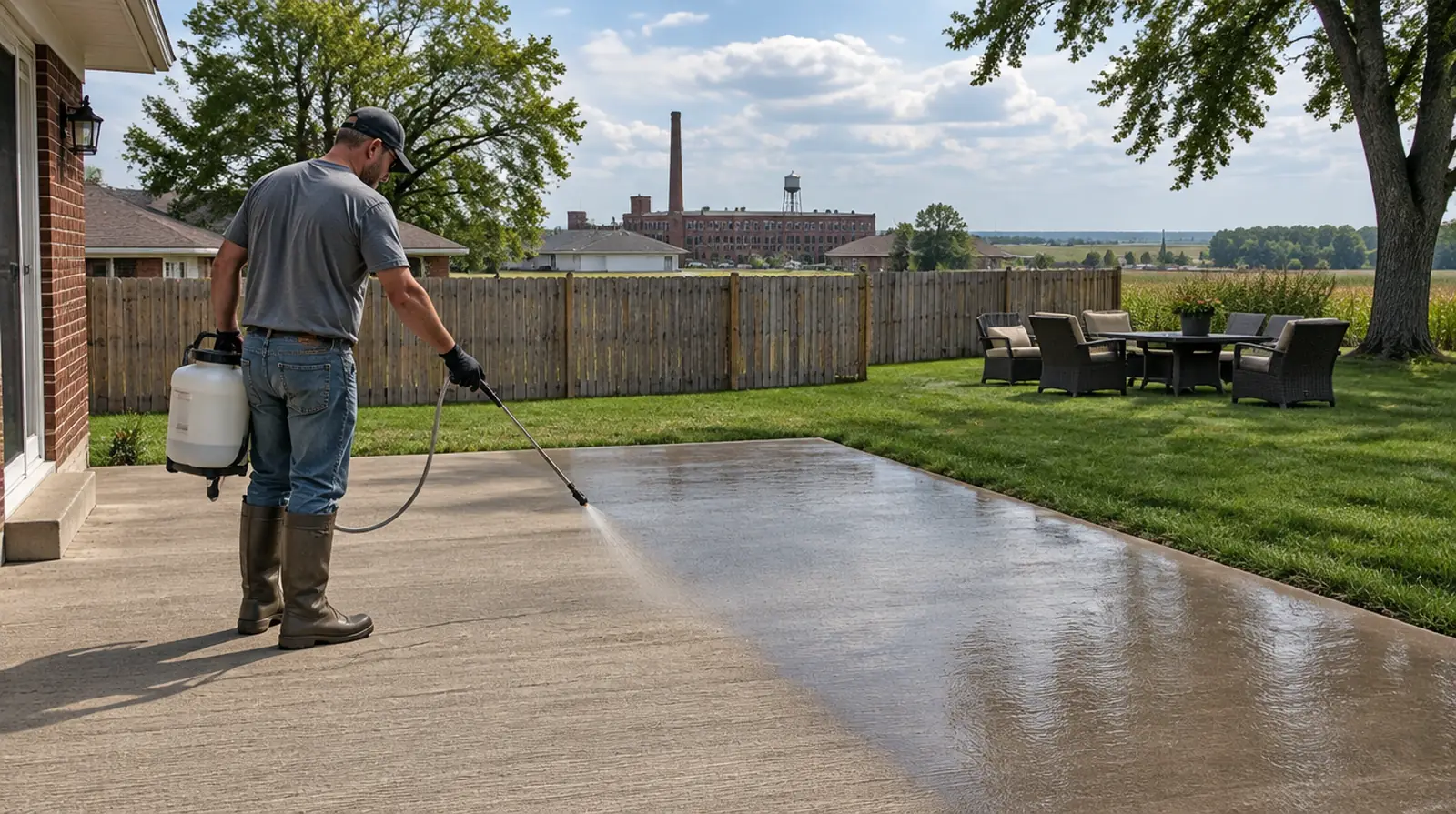
Sealers only work on clean concrete. We pressure wash or use a rotary surface cleaner, treat oil and rust stains, remove mildew and let the slab dry before applying. Old, peeling sealers are stripped first. Cracks can be filled with flexible sealant before sealing.
Stamped and decorative patios
Stamped patios fade, lose their sheen and collect dirt in the texture. Cleaning and resealing with a tinted or clear film sealer brings back color and protects the surface. We choose products that resist UV and add grit for footing.
Interior slabs
Basement and shop floors that will not be coated can still benefit from a sealer. A penetrating densifier hardens the surface and reduces dusting. A clear sealer makes cleaning easier and reduces staining. If you plan to install flooring later, we can test the slab and advise on moisture barriers.
When to seal
Late spring through early fall is ideal, when the slab is dry and temperatures are moderate. Sealing in late summer or early fall prepares concrete for winter. New concrete typically needs to cure about a month before sealing.
How often
Penetrating sealers on driveways and walks usually last several years. Film sealers on patios may need attention every two to three years. A simple water test helps: if water darkens the concrete quickly instead of beading, it is time to reseal.
What sealing cannot do
Sealing protects sound concrete. It will not fix deep scaling, large cracks or heaved sections. Severely damaged surfaces may need resurfacing or replacement. We will give you an honest assessment.
Protecting landscaping
We cover plants, siding, garage doors and vehicles before spraying, and we control runoff from cleaning so it does not damage lawns or gardens.
Questions
Will sealing make my driveway slippery? Penetrating sealers do not. Film sealers get an anti-slip additive.
Can I drive on it right away? Usually after a day, depending on the product and weather.
Can you seal over old sealer? If it is compatible and in good shape, yes. Otherwise we strip it.
Porches on older homes
Many houses built between the wars have wide concrete front porches with steps down to the walk. Decades of rain dripping from the roof edge and de-icer scattered on the steps leave these surfaces rough and stained. We clean them, fill hairline cracks, patch chipped step noses and apply a breathable sealer that keeps the original look. A porch that has been cared for this way stays safer underfoot and needs far less scrubbing each spring.
Schedule sealing
Call (765) 615-3076 for a free estimate.