What makes polyaspartic different
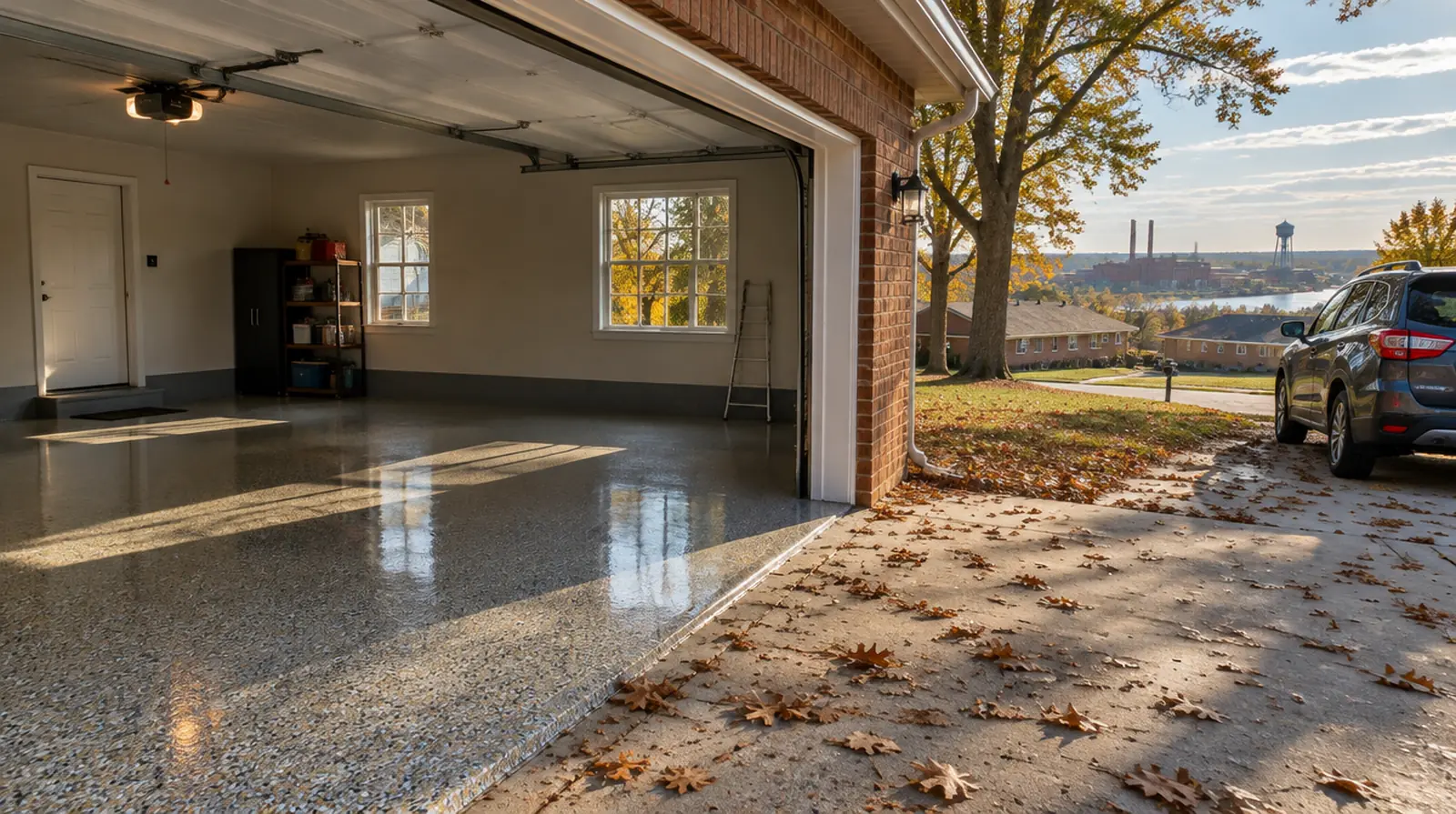
Polyaspartic is a type of aliphatic polyurea. In plain terms, it is a tough, flexible coating that cures far faster than epoxy and stays clear when sunlight hits it. Standard epoxy can take a day or more between coats and several days before you can park. Polyaspartic can often be recoated within an hour or two, and many garages are back in use the next day. Because it is aliphatic, it does not yellow in sunlight the way many epoxies do near an open garage door.
Good for busy households
Many families have one garage and no other place to put the cars. A multi-day epoxy job means parking in the driveway or on the street for most of a week. A polyaspartic system cuts that to roughly a day. It is also a good fit when a homeowner is selling a house and needs the garage finished on a tight schedule, or when a business cannot afford to close for long.
A longer working season
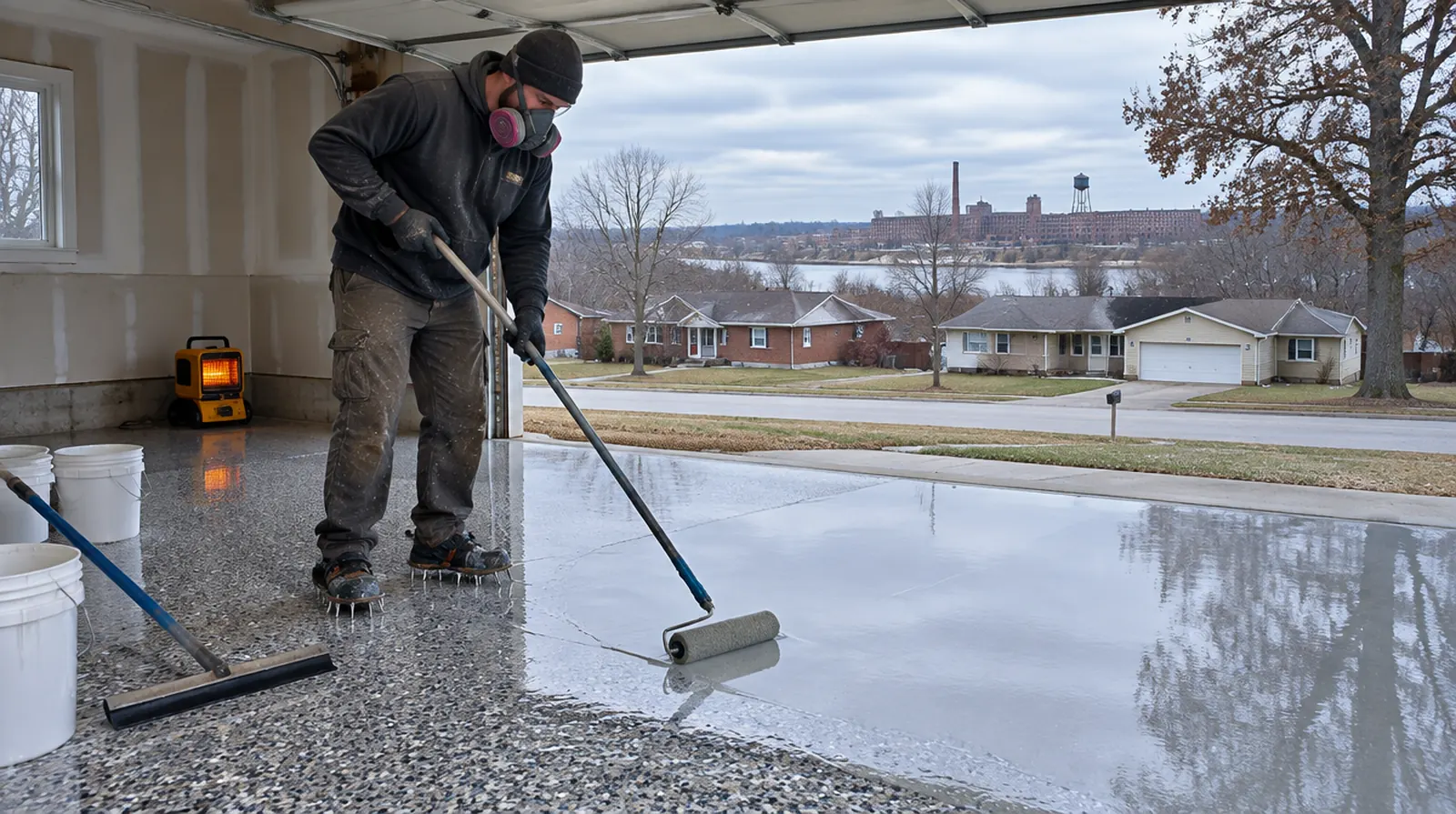
Epoxy needs warmth to cure properly. In an unheated garage in central Indiana, that leaves a window from spring to early fall. Polyaspartic cures at much lower temperatures. With the right formula and a little supplemental heat, we can coat garages later into November and earlier in March than epoxy allows. That flexibility helps when your schedule or a closing date does not line up with summer.
Resistance to salt and chemicals
Cured polyaspartic resists road salt, calcium chloride, gasoline, motor oil, brake fluid and antifreeze. It handles the scrape of snow shovels and the weight of snowblowers. Its flexibility helps it handle temperature swings and minor slab movement without cracking. Its abrasion resistance is excellent, which matters where tires turn and toolboxes roll.
Paired with an epoxy primer
Polyaspartic is fast, but that speed means it has less time to soak into concrete. For most floors, we use an epoxy primer for deep penetration and bond, then build the base and topcoats with polyaspartic. On slabs with higher moisture readings, a vapor-tolerant epoxy primer is essential, because polyaspartic on its own does not block vapor drive.
Skilled installation
Fast cure has a downside: there is little room for error. Mixed material can begin to set in the bucket within minutes. Our crews work in teams, mix small batches and keep a steady pace so the floor goes down evenly without lap marks. This is one reason polyaspartic is not sold widely as a do-it-yourself product.
Finish choices
Polyaspartic works with full flake broadcast, quartz, solid colors and clear topcoats over metallic or flake bases. Most garage clients choose flake for its looks and grip. We can adjust texture with grit additives for ramps, steps and wet areas.
Commercial uses
Restaurants, retail spaces, auto shops and warehouses use polyaspartic when downtime is expensive. We can coat a section overnight and have it ready for traffic in the morning, phasing larger floors over several nights.
Odor and ventilation
Polyaspartic has a noticeable odor during application. We ventilate with doors and fans, keep people and pets out of the area and recommend keeping the door to the house closed. The odor fades quickly as the coating cures.
Timeline
Many garages are done in one day: grinding, repairs, primer, base and broadcast, then topcoat by afternoon or evening. Foot traffic is usually fine within a few hours of the final coat, and vehicles can typically return after about 24 hours in mild weather.
Cost
Polyaspartic usually costs more than an all-epoxy system because the material is more expensive and the installation demands experience. For many homeowners, the faster return, the wider season and the UV stability are worth the difference.
Questions
Is polyaspartic better than epoxy? They work well together. Epoxy bonds deeply; polyaspartic finishes fast and stays clear.
Can it go over an old coating? Only if that coating is sound and properly abraded. Failing coatings must come off.
Will it yellow? No. That is one of its main advantages.
Book a fast-cure floor
Call (765) 615-3076 for a free estimate.