What polished concrete is
Polished concrete is not a coating. It is the slab itself, ground flat with progressively finer diamond tooling, hardened with a chemical densifier and polished until it reflects light. Because there is no film on top, there is nothing to peel, chip or delaminate. The floor wears like stone and only gets better with regular burnishing.
The process
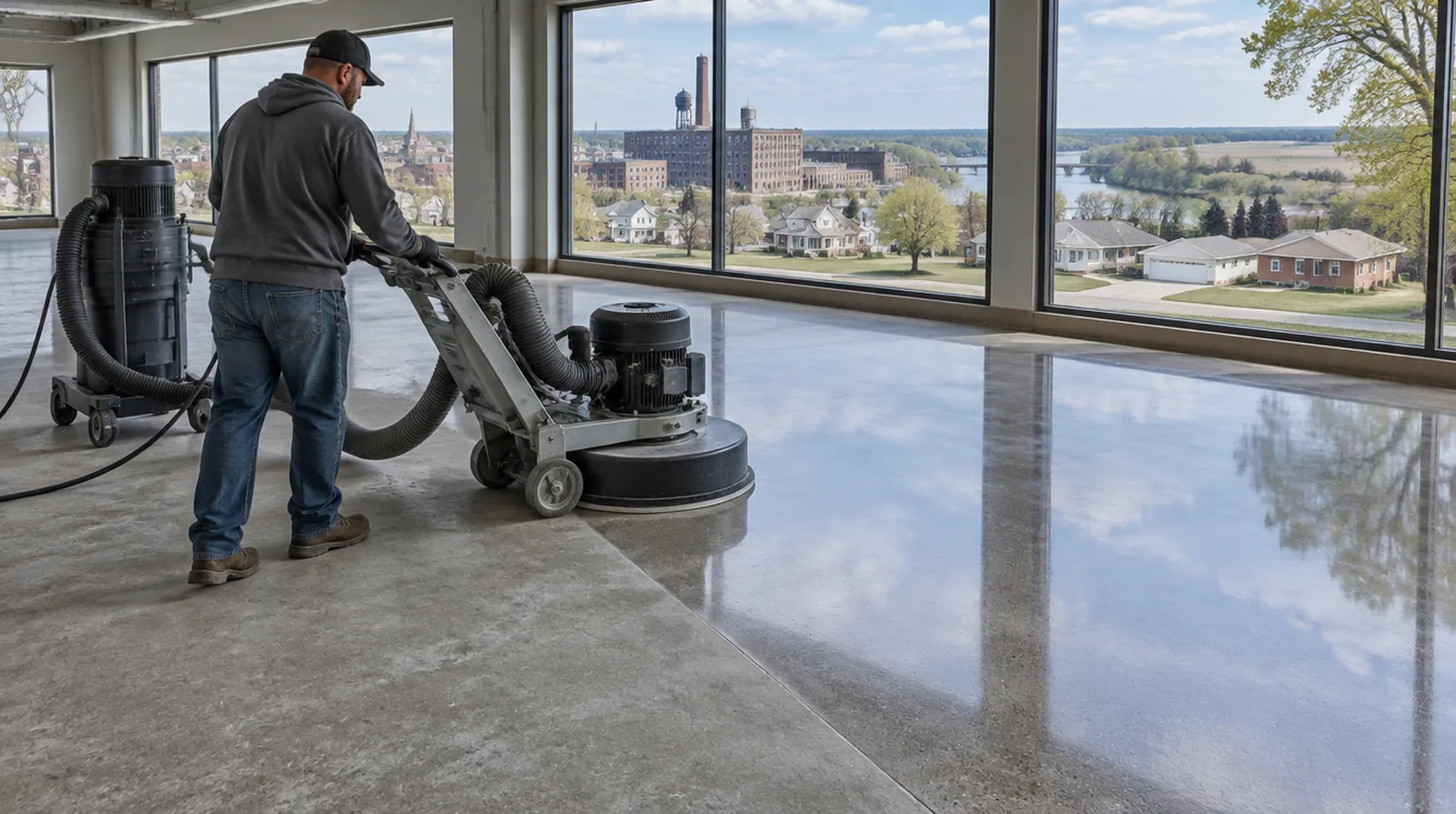
We start with coarse metal-bond diamonds to remove surface defects, coatings and adhesives and to reach the desired level of aggregate exposure. Then we step up through finer grits, apply a lithium or sodium silicate densifier that reacts with the concrete to harden it, and continue polishing with resin-bond diamonds. A penetrating guard can be added to improve stain resistance. Each step refines the surface until it reaches the chosen sheen.
Aggregate exposure
You can choose how much of the stone inside the concrete shows. Cream polish leaves the surface paste intact for a smooth, uniform look. Salt and pepper exposes fine sand. Full aggregate exposure grinds deeper to reveal larger stones for a terrazzo-like appearance. The slab you have determines what is possible, so we often grind a test area first.
Sheen levels
Satin finishes have a soft glow and suit homes and offices. Semi-gloss is common in retail. High gloss gives a mirror-like reflection for showrooms and lobbies. Higher sheen requires more polishing steps and a harder slab.
Where it works well
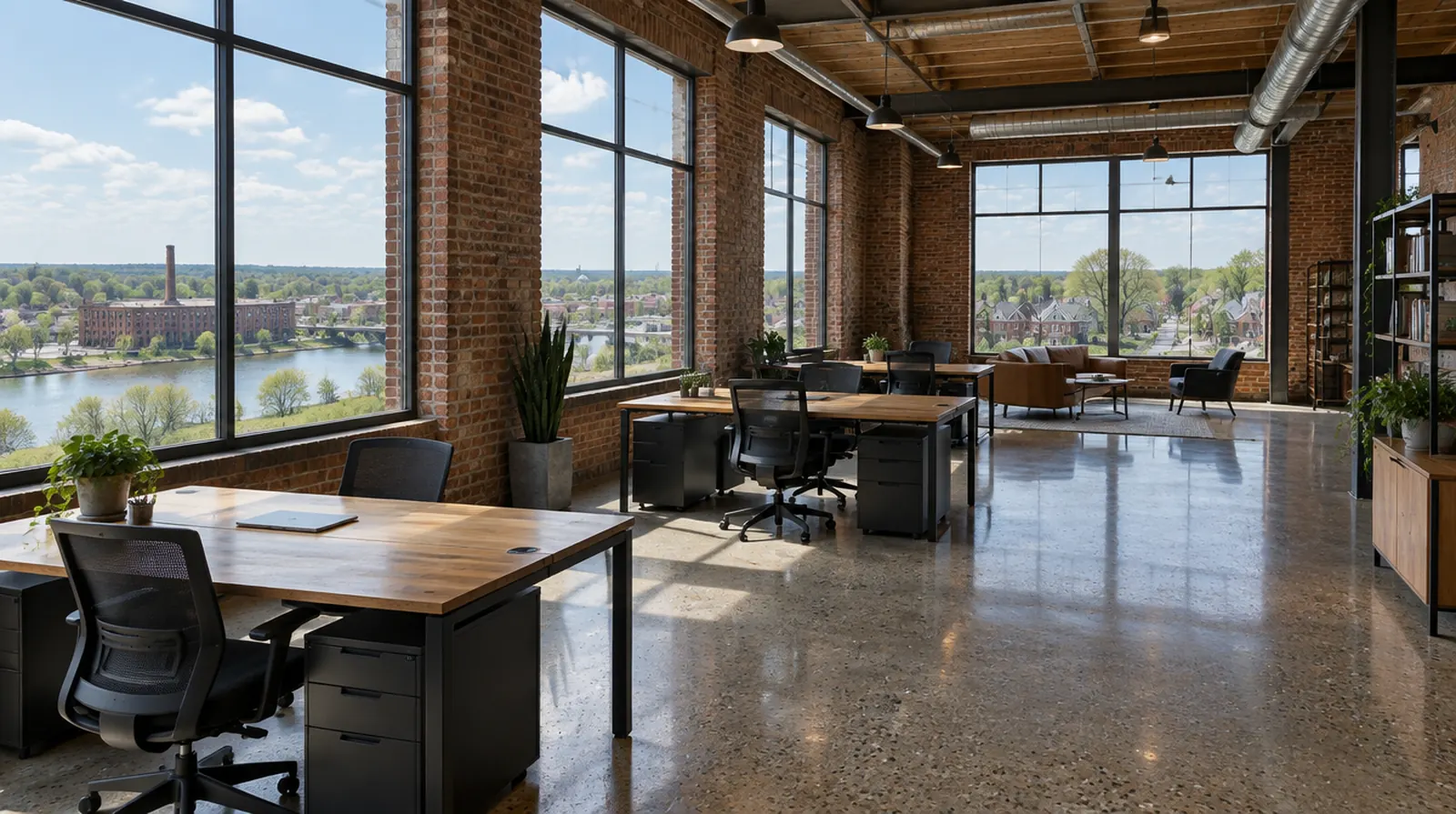
Polished concrete suits basements, loft apartments, offices, retail stores, restaurants, breweries, gyms, schools and warehouses. Many of the large brick and steel buildings in town have been converted into offices, event spaces and shops, and their original slabs often polish beautifully once old coatings are removed. In basements, polished concrete gives a clean, dry-feeling floor without the moisture risk that comes with carpet or wood.
What polishing cannot do
Polishing reveals the slab as it is. Cracks, patches, stains and color variation will show. Some clients love that character; others prefer a uniform look. Severely damaged or soft slabs may not polish well. Where the slab will not take a good polish, we may recommend a coating instead.
Stains and dyes
Penetrating dyes can be added during polishing to warm up gray concrete or create color zones, borders and logos. Dyes work best indoors because some fade in direct sunlight.
Basement considerations
Polishing does not seal out moisture the way a coating can, but it also cannot delaminate because of vapor. That makes it a good choice for basements where moisture readings are moderately high. Area rugs warm up the space and add comfort.
Maintenance
Daily or weekly dust mopping removes grit. Damp mop with a neutral cleaner. In commercial spaces, auto scrubbers and periodic high-speed burnishing keep the shine. There is no stripping or waxing, which saves money over the years compared with vinyl tile.
Durability and cost over time
A densified, polished slab resists abrasion and forklift traffic and lasts for decades. Initial cost is often comparable to mid-range coatings, but long-term maintenance costs are lower. That is why many warehouses and big-box stores choose it.
Dust control
All our grinding and polishing equipment connects to HEPA dust extractors. For occupied homes and businesses, we also use plastic barriers to contain any residual dust.
Timeline
A basement or small office may take two to three days. Large commercial floors are scheduled in phases. The floor can usually be walked on immediately after polishing, which is a major advantage for businesses.
Questions
Is polished concrete slippery? When kept clean and dry, it meets common slip-resistance standards. Wet floors call for caution, as with any smooth surface.
Can you polish a garage? Yes, though salt and oil stains may suggest a coating instead.
Can my old slab be polished? Most can. A test area tells us how it will look.
Ask about polishing
Call (765) 615-3076 for a free estimate.