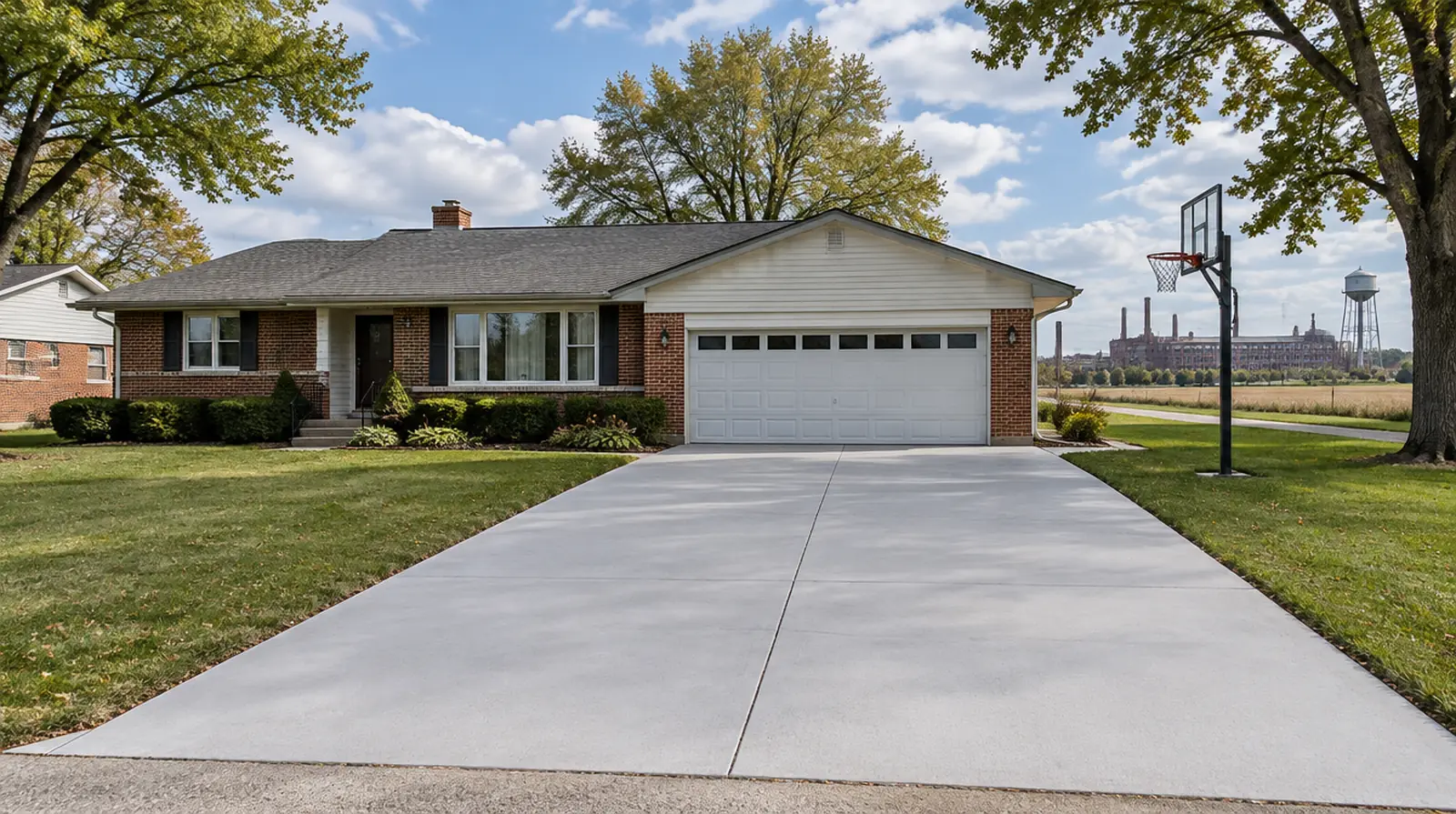
When a driveway starts to show its age
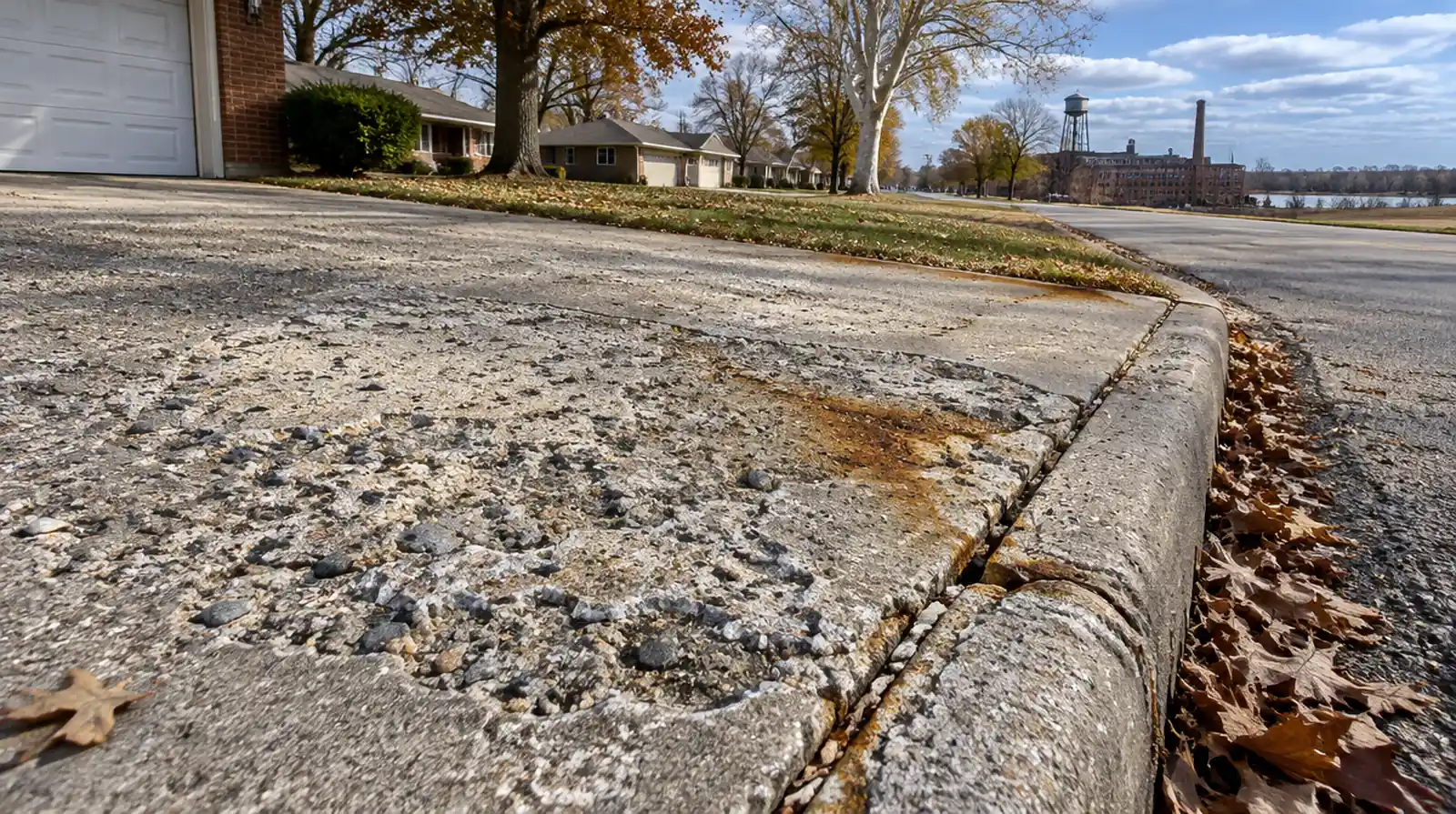
A driveway can be structurally sound but look terrible. Salt scaling at the apron, pitting, popouts, rust stains from fertilizer, tire marks and patchy discoloration are all common. Replacing an entire driveway is expensive and disruptive. If the slab is not heaving or breaking up, resurfacing can restore a clean, uniform look for much less.
What resurfacing involves
We clean the driveway with a rotary surface cleaner, remove loose material, repair cracks and fill low areas. Then we apply a polymer-modified cementitious overlay that bonds to the existing concrete. It can be troweled smooth, broom finished for grip or textured. Control joints are preserved or recut so the new surface can move with the slab. A sealer goes on after curing.
Coating options
Some homeowners want more than a fresh concrete look. Exterior-rated coatings, tinted overlays and decorative finishes like stone patterns or borders are possible. We avoid standard epoxy outdoors because it yellows in sunlight and can become slippery. UV-stable products and textured finishes are the right choice for exterior work.
Aprons and salt damage
The apron where the driveway meets the street usually takes the worst damage because it gets plow spray and road salt. Sometimes we resurface just the apron and a section of the driveway, then seal the rest. Tailoring the scope to the damage saves money.
Cracks
Hairline and stable cracks are routed and filled before resurfacing. Wider cracks and those with height differences may continue to move, and an overlay may crack along them later. We discuss those risks and options, which may include partial slab replacement.
When resurfacing is not the answer
If a driveway has sunk, heaved, broken into pieces or has large areas of failing concrete, an overlay will not last. Tree roots, poor base preparation and clay soil movement can cause this. In those cases we will tell you honestly that replacement or leveling should come first.
Walkways, steps and porches
Front walks and steps often have the same scaling and wear as driveways. Resurfacing them at the same time gives a consistent look and improves footing. We add texture on steps for safety.
Weather and timing
Resurfacing needs dry weather and moderate temperatures, typically late spring to early fall. We monitor forecasts and reschedule if rain or cold is expected during the cure period.
How long it takes
Most driveways take one to two days of work. Foot traffic can usually resume the next day and vehicles after a few days, depending on temperature and product.
Maintenance
Reseal every few years, especially before winter. Use calcium magnesium acetate or sand instead of rock salt where possible, and remove snow promptly. Clean oil spills soon after they happen.
Cost
Resurfacing typically costs a fraction of replacement. Price depends on area, repair needs, finish and whether walkways or steps are included.
Questions
How long will an overlay last? Many years with proper prep and regular sealing.
Will it match my garage floor? We can coordinate colors, though interior and exterior systems differ.
Can you resurface asphalt? No. Our resurfacing is for concrete only.
Long rural driveways
Homes on the edge of town and out on county roads sometimes have concrete drives a hundred feet or longer. Resurfacing an entire run like that is a big job, so we often split it into priorities: the apron and the section near the garage, where wear and visibility are greatest, get a full overlay, while the middle stretch is cleaned, crack-filled and sealed. That approach spreads the cost and still makes the property look cared for.
Fertilizer and rust stains
Orange spots on a driveway usually come from lawn fertilizer pellets or iron in well water from sprinklers. Pressure washing alone rarely lifts them. We use stain removers made for concrete before resurfacing or sealing, so the new surface does not show old marks bleeding through.
Get a driveway quote
Call (765) 615-3076 for a free estimate.