How metallic floors get their look
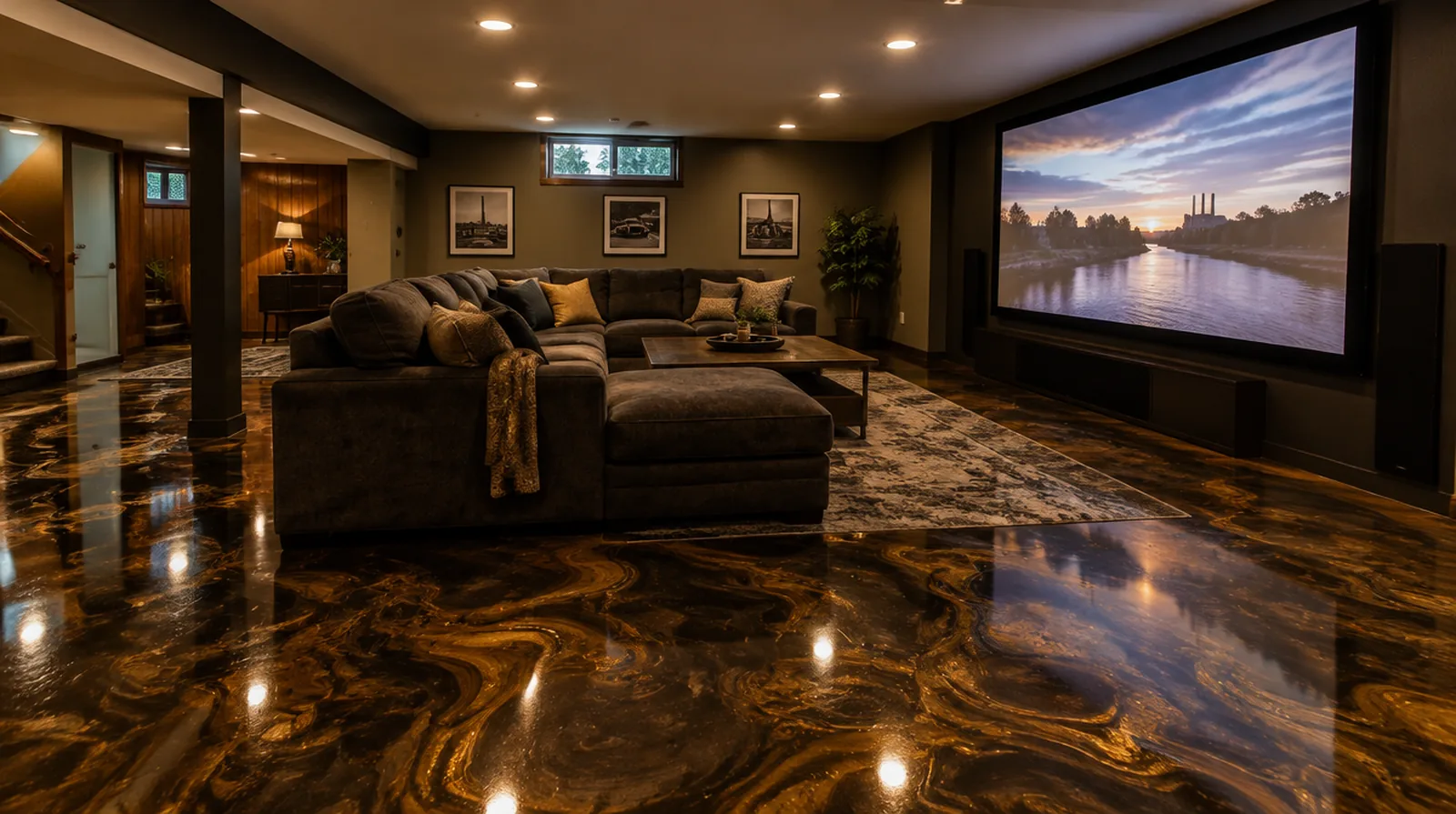
Metallic epoxy contains fine reflective pigment suspended in clear resin. While the material is wet, our installers move it with rollers, trowels, brushes and sometimes a light mist of solvent. The pigment drifts and settles into ripples, clouds and veins. Once cured, the floor reflects light at different angles, so it seems to have depth, almost like looking into polished stone or water. No two floors come out the same, which is a big part of the appeal.
Where it works best
Metallic floors shine in finished basements, home theaters, game rooms, home bars, salons, boutiques, offices, showrooms and restaurants. These are spaces where the floor is part of the design and traffic is moderate. In a busy two-car garage, metallic looks striking on day one but shows scratches and salt residue more than a flake floor. We will be honest about that tradeoff.
Basement moisture comes first
A large share of the metallic floors we install go into basements. Many homes in town were built before modern vapor barriers, and the clay soil holds water after heavy spring rain. Vapor rising through the slab can lift any coating. Before we quote, we test the slab. If readings are elevated, we install a moisture-mitigating epoxy primer as the first layer. If water is entering at walls or a sump pit is overwhelmed, that needs to be solved first.
Preparation matters more on glossy floors
A high-gloss surface magnifies every flaw underneath. Basement slabs often have old tile adhesive, paint spills, patches, pits and low spots. We grind them thoroughly, remove mastic, fill cracks and holes, and apply a skim coat where needed so the floor is flat and uniform. That work is invisible in the finished floor, but it is the reason the finish looks smooth instead of lumpy.
The installation
After grinding and repairs, we prime the slab and apply a tinted base coat that sets the background tone. Then the metallic layer goes down in carefully timed sections so there are no visible seams. We work the pattern while it is wet, following reference photos you approved. A clear topcoat finishes the floor and protects the design from scratches and wear.
Color ideas
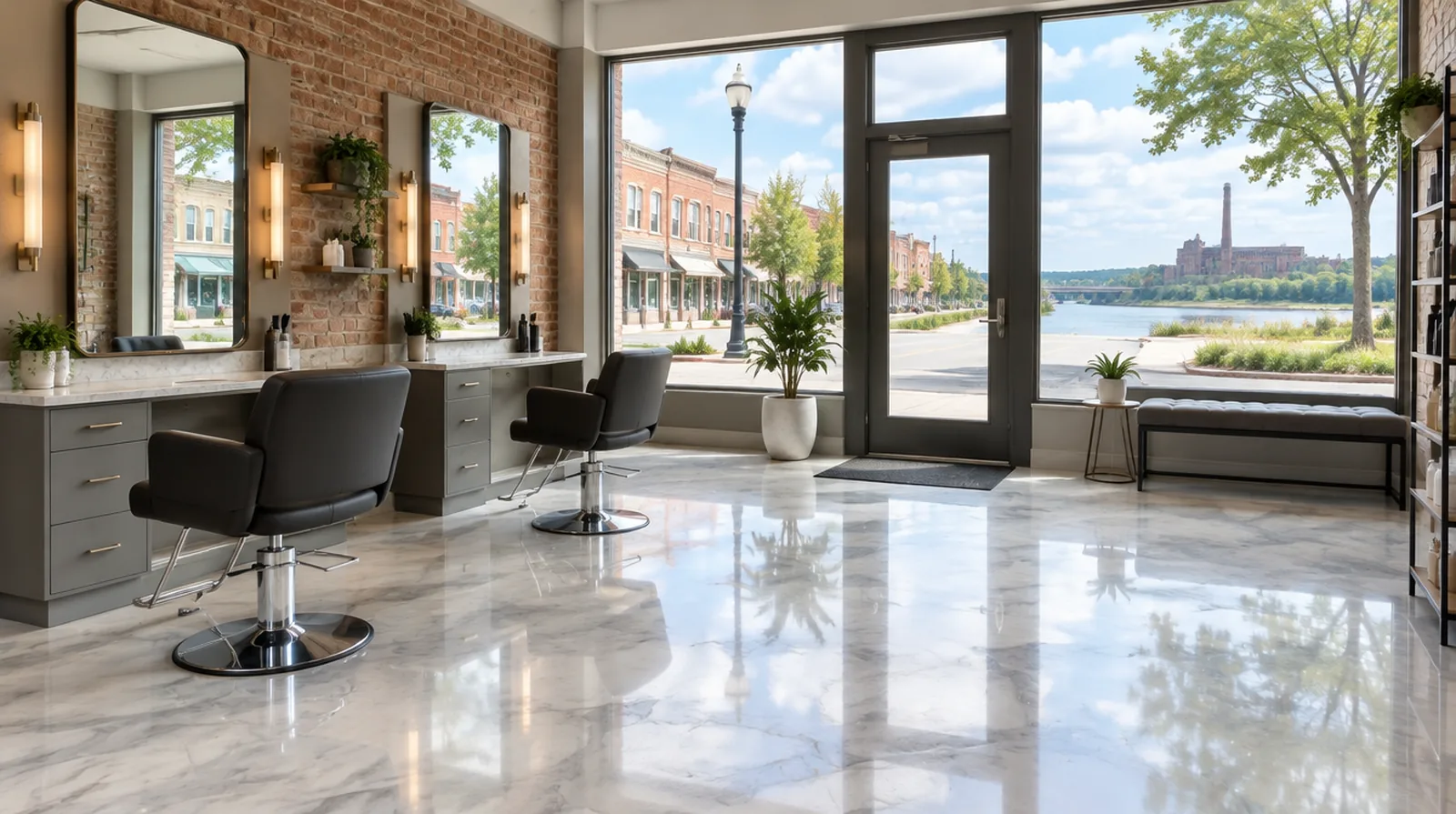
Bronze and gold over black give a warm, rich look for theaters and bars. Charcoal and silver feel modern. White and gray with fine veining mimic marble for salons and kitchens. Deep blue with silver works for showrooms. Some clients ask for school or team colors in a game room. We make sample boards before installation so you can see the actual colors and movement.
Temperature and airflow
Metallic epoxy needs a stable, comfortable temperature to flow and level. Drafts, heat registers and fans can push the pigment in unwanted directions. We close off the room, adjust or cover vents and monitor temperature through the pour and early cure.
Slip resistance
Smooth, glossy floors can be slippery when wet. For bathrooms, entries and commercial spaces, we add a fine clear grit to the topcoat that improves traction without hiding the pattern. In living spaces, area rugs and mats at doors are usually enough.
Commercial metallic floors
Downtown storefronts, salons, boutiques and restaurants use metallic floors to make an impression. For these, we choose harder topcoats rated for heavy traffic and plan the work around business hours, often over a weekend or a few evenings.
Timeline
Plan on three to four days for a typical basement: grinding and repairs, priming and base coat, metallic layer, then topcoat. Light foot traffic is usually fine a day after the final coat, furniture after two or three days, and full cure in about a week.
Cost
Metallic floors cost more than standard garage coatings because of material cost, extra preparation and the skill needed to install them. Area, moisture mitigation, repair needs and design complexity determine the final price.
Care
Dust-mop regularly so grit does not scratch the surface. Wash with a neutral cleaner and a microfiber mop. Use felt pads under furniture and mats at entries. When the topcoat eventually dulls, a light sanding and fresh topcoat restore the gloss.
Questions
Can I see my floor before it goes down? Sample boards and photos give a good idea, though every pour is unique.
Can you go over vinyl or tile? We remove them first for a reliable bond.
How durable is it? Very, with a quality topcoat and basic care.
Plan a metallic floor
Call (765) 615-3076 for a free estimate.