What happens to an uncoated garage floor
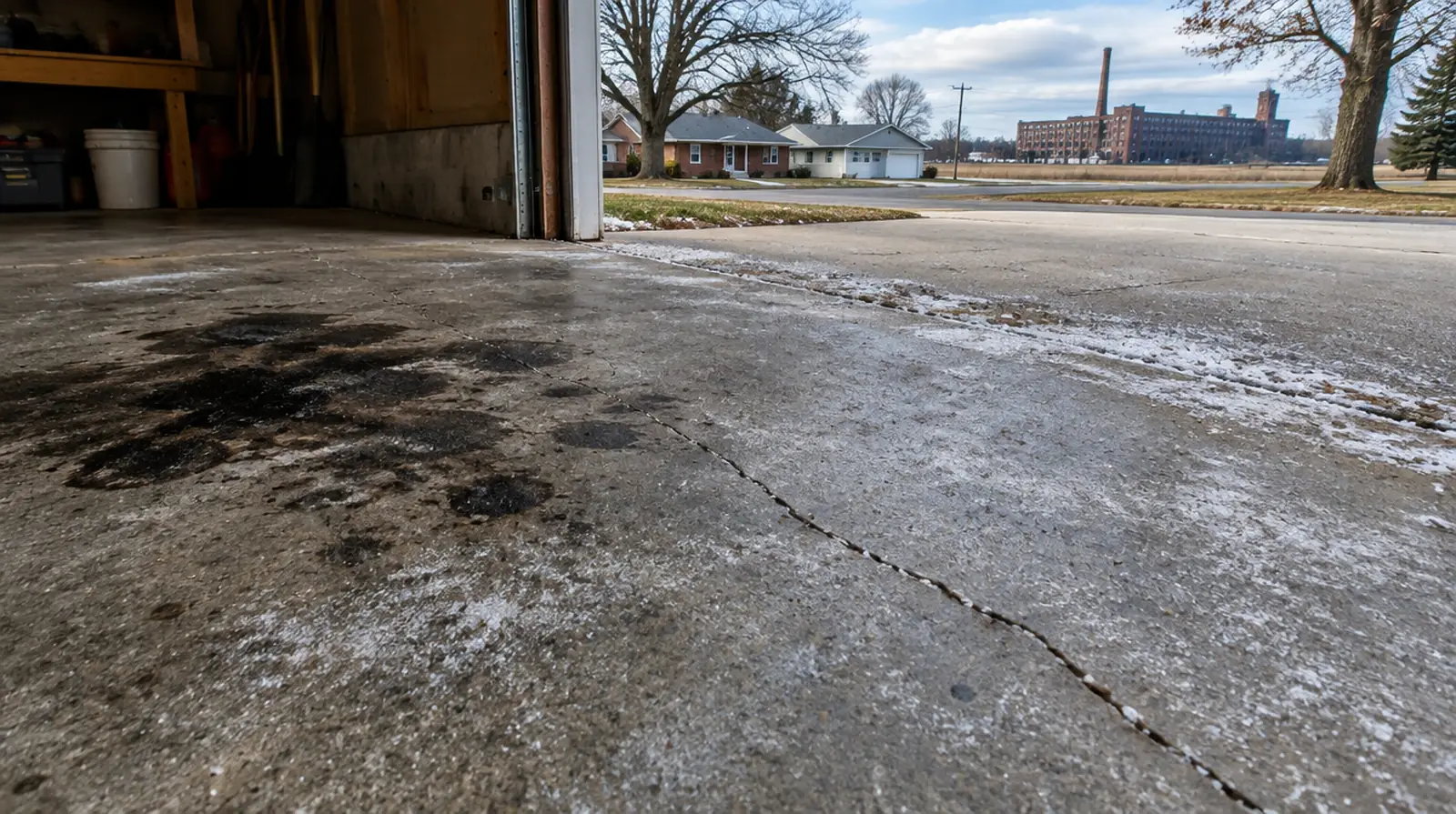
Concrete looks solid, but it is full of tiny pores. In a garage, those pores soak up whatever lands on them. Oil from a leaking gasket spreads into a dark stain that never quite washes out. Antifreeze leaves a sweet-smelling ring. In winter, meltwater full of road salt seeps in, freezes on a cold night and pushes the top layer of cement loose. Over time the surface gets rough and dusty, and every sweep seems to produce more grit. That dust ends up on shoes, in the house and on whatever you store on the floor.
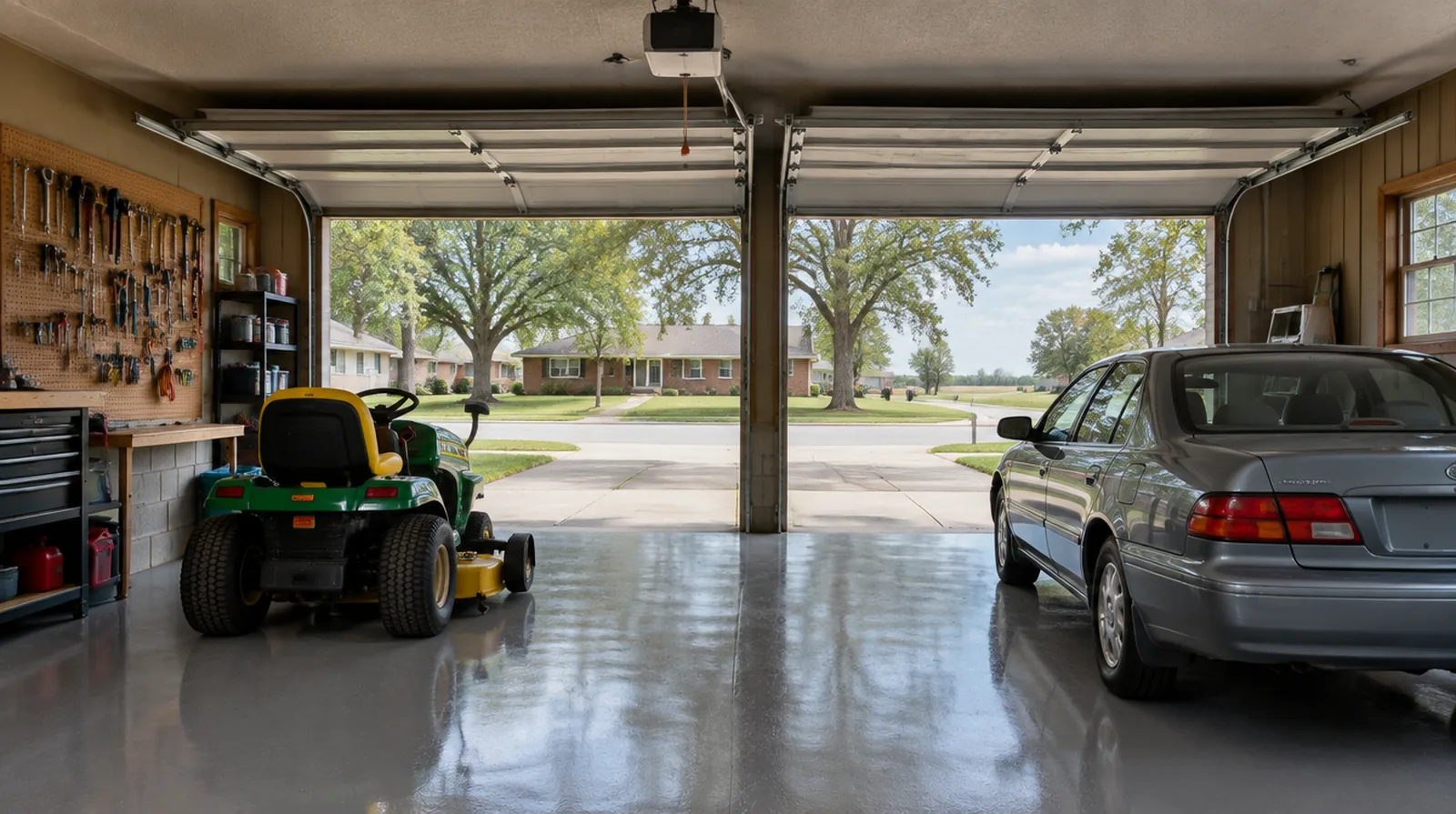
A properly installed epoxy system closes those pores. The resin bonds into the ground surface and forms a hard, continuous layer. Fluids sit on top. Salt film can be rinsed away. Dust stops coming up from below. The garage becomes brighter, cleaner and a lot more pleasant to use for anything beyond parking.
Why we grind instead of etch
Hardware store kits tell you to wash the floor with acid and roll the coating on. Acid etching leaves residue, does little to remove old sealers or oil, and gives an uneven profile. That is the main reason kit floors peel within a year or two. We use planetary diamond grinders connected to industrial dust extractors. The grinder removes the weak top layer, cuts through old paint and contamination, and leaves a uniform texture the primer can grip. The extractor keeps dust out of the air and off your belongings.
Repairs before coating
Most garage slabs in town have at least one crack, and many have a rough strip along the door where salt has done its work. Stable cracks are cut open and filled with a fast-setting polyurea that flexes slightly with the slab. Pitted or flaked areas are rebuilt with epoxy mortar so the surface is level. Control joints can be filled for a seamless look or honored and cut back in after coating. Oil-soaked spots are degreased, ground deeper and treated so the primer bonds.
The coating layers
Primer. A low-viscosity epoxy primer soaks into the ground concrete and locks in.
Base coat. A pigmented epoxy builds thickness and sets the color.
Broadcast (optional). Vinyl flake or quartz is spread into the wet base coat for texture and pattern.
Topcoat. A clear, UV-stable polyaspartic or urethane seals the surface and resists scratches, with grit added for traction.
Hot tire pickup
When you drive home on a summer day, your tires are warm and soft. Park on a thin coating and the rubber can grab it, then pull it loose when you back out. That is hot tire pickup, and it is the most common failure we see on DIY floors. Our systems are built thick enough, and bonded well enough, that tires simply sit on a hard surface. Proper grinding is the biggest factor, followed by using commercial-grade resin rather than water-based kits.
Timing and temperature
Epoxy cures through a chemical reaction that slows in the cold. In unheated garages, we schedule standard epoxy from roughly April through October. Outside that window we either heat the space or use a fast-cure polyaspartic system that tolerates lower slab temperatures. We also watch dew point, because a slab colder than the air can collect a thin film of moisture that ruins adhesion.
Finish options
A solid color floor in gray, tan or charcoal looks clean and modern. A full flake broadcast adds texture and hides dirt between cleanings. Quartz gives a gritty, extremely durable surface favored in work garages. We can add a contrasting border, a painted parking line or a logo for car clubs and collectors.
Detached and older garages
Detached garages behind older homes often have thinner slabs, uneven settling and limited power. We bring a generator when the outlet cannot handle a grinder, and we check for slab heave before we commit to a coating. Where one corner has dropped or lifted significantly, we will explain the options rather than coat over a problem that will keep moving.
Project length
Most two-car garages take two to three days with an epoxy base, or one to two days with a polyaspartic system. Light foot traffic is fine the next day. Vehicles can usually return after two to five days depending on temperature and the products used.
Cost factors
Price depends on square footage, the amount of crack and surface repair, whether an old coating has to come off, the finish you choose and whether we need to heat the space. Every estimate is itemized so you can see what each part of the job costs.
Questions
Can you coat over my old paint? No. We grind it off so the new system bonds to bare concrete.
Will salt hurt the new floor? A cured floor is not damaged by road salt. Rinse the film off now and then so it does not dull the gloss.
Can I store things on it right away? Give it two days for foot traffic and light items, longer for heavy storage and vehicles.
How long will it last? With good prep and basic care, many years of daily use.
Get a garage floor estimate
Call (765) 615-3076 for a free estimate.